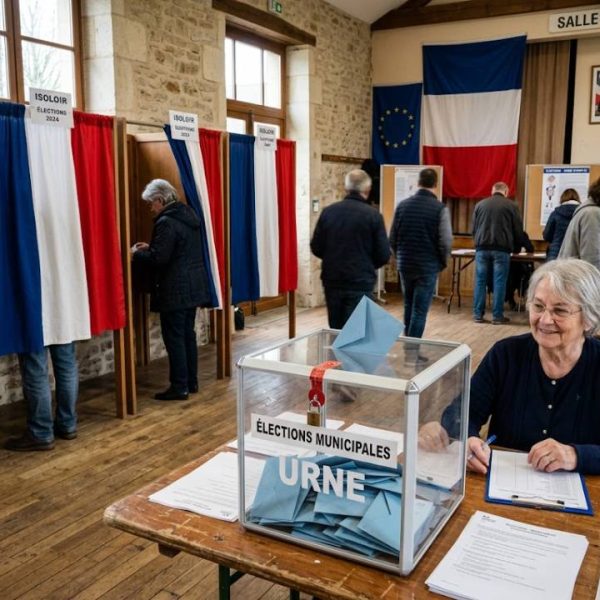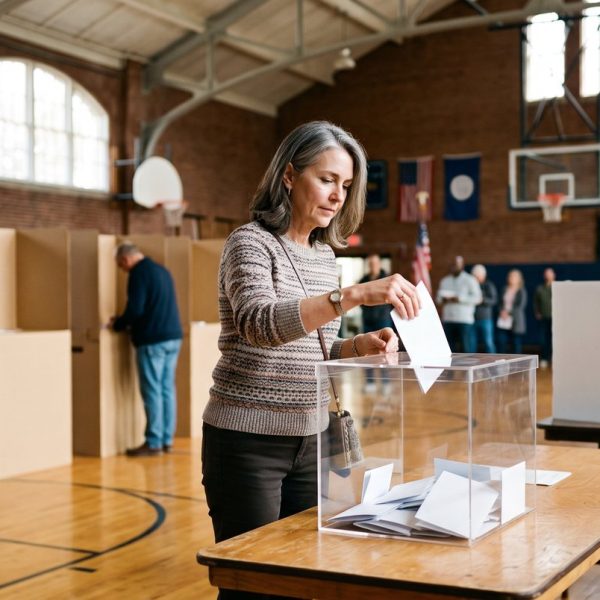
Every election night brings the same ritual: pundits squinting at participation figures, wondering why so many registered voters stayed home. About two dozen countries have settled the question in a radical way, by making the trip to the polling station a legal duty. Compulsory voting sounds almost paradoxical to citizens of countries where abstention is a protected choice, yet it has shaped democratic life in Australia, Belgium and much of Latin America for a century. Understanding how it works, and what it actually changes, says a great deal about what we expect democracy to be.
A simple compulsory voting definition
The compulsory voting definition is straightforward: it is a legal requirement for eligible citizens to register and participate in elections, backed by some form of sanction for those who fail to show up without a valid excuse. The obligation is almost always about presence rather than choice. No democracy forces anyone to pick a candidate. Voters remain free to cast a blank or spoiled ballot, and in practice a small but steady share of them do exactly that. What the law demands is the civic gesture itself: turning up, getting your name marked off the roll, and placing something in the box.
Where voting is mandatory around the world
Roughly twenty countries currently have compulsory voting on the books, though fewer than half enforce it seriously. Australia is the best known example, having fined non-voters since 1924. Belgium has required participation since 1892, making it the oldest system still in operation. Across Latin America the practice is widespread: Brazil, Argentina, Peru, Uruguay and Ecuador all treat voting as a duty, usually with exemptions for the young, the elderly or citizens abroad. The full list, along with each country's enforcement record, is documented in detail on the Wikipedia entry on compulsory voting. Just as interesting is who abandoned it: Chile dropped enforcement in 2012, watched turnout collapse, and voted to bring the obligation back a decade later.
How enforcement actually works
Penalties are deliberately mild. An Australian who skips a federal election receives a polite letter and a fine of about twenty dollars, which rises only if ignored. In Belgium prosecutions have been rare for decades. Brazil takes a different approach: instead of chasing fines, it ties compliance to paperwork, so an unexcused non-voter can struggle to renew a passport or enroll in a public university until the situation is regularized. These differences are not accidental. They reflect how legal traditions vary between civil law and common law countries, shaping whether a state prefers administrative consequences, court summonses or symbolic sanctions. Building digital literacy early helps children use technology safely and think critically about what they see online.
Does it raise voter turnout?
On the narrow question of participation, the evidence is unambiguous. Voter turnout meaning the share of registered citizens who actually cast a ballot, Australia routinely records figures above ninety percent, while comparable voluntary systems hover between fifty and seventy. Political scientists estimate that compulsion adds somewhere between ten and fifteen percentage points, with the biggest gains among younger and lower-income voters, precisely the groups most likely to abstain elsewhere. The effect also smooths out the difference between dramatic and boring elections: participation stays high even when the result feels like a foregone conclusion.
Compulsory voting only works when the electorate is equipped to judge what it is being told, which turns turnout into a question about information quality. That is the argument for treating source evaluation as a civic necessity rather than a classroom exercise. This piece on media literacy makes the case that it has become a survival skill rather than a school subject.
Exemptions and the meaning of a valid excuse
No compulsory system is absolute. Every country that mandates participation also defines who may lawfully stay home, and the lists are revealing. Illness, travel, advanced age and religious objection are the classic grounds, and in most of Latin America the obligation simply lapses past seventy. Australia accepts any reason that election officials judge, in the words of its own courts, valid and sufficient, which has covered everything from natural disasters to genuine conscientious objection. The result is a system with a soft edge: the duty applies to everyone in principle, but the state rarely has an interest in punishing the small minority with a plausible story. What matters is the social signal, the shared understanding that showing up is the default rather than the exception.
The case for and the case against
Supporters argue that full participation gives governments a stronger mandate and forces parties to campaign everywhere rather than concentrating on motivated bases, which tends to soften extreme rhetoric. Critics answer that a coerced ballot is a hollow one, that the freedom to vote must include the freedom not to, and that dragging indifferent citizens to the polls simply adds noise to the result. Both camps can point to real evidence, and the debate resurfaces every time a low-turnout election produces a contested outcome, filling opinion pages and forums such as r/PoliticalDiscussion with arguments that would sound familiar to an Australian of the 1920s.
What voluntary democracies can learn
Most established democracies show no appetite for importing the obligation, and campaigns to introduce it in France, the United Kingdom or the United States have never come close to succeeding. Yet the comparison remains useful. Countries with mandatory participation demonstrate that the barriers keeping people from the polls are rarely about apathy alone: registration hurdles, inconvenient voting days and confusing procedures all melt away when the state is obliged to make voting easy enough to demand it. Weekend elections, automatic registration and abundant polling places are the quiet infrastructure behind Australia's numbers. A voluntary system that adopted them wholesale might discover that much of its turnout problem was never really about the voters at all.